Turning Klaviyo Reviews into Email Revenue: The UGC-to-Send Playbook for DTC Brands
By Loyal Send, Editorial Team6 min read
Listen to this article8:00
Schedule a free strategy call and Loyal Send will build a custom plan for you.
Schedule Your Free Strategy CallFree audit. No commitment.
Get a Free Audit. No commitment.
Most DTC brands treat product reviews as social proof. The top 5 percent turn them into a revenue engine by piping review content back into email. Here's the playbook.
Here's the pattern we see at brand audits: the company has collected 5,000 to 50,000 reviews over a 3-year lifespan. Those reviews sit in Klaviyo Reviews (or Yotpo, Okendo, Junip) and appear on product pages. The customer trust lift is real. But almost no brand pipes the review content back into email campaigns in a structured way. That's a massive missed lever.
Here's why it matters: a 5-star review from a real customer outperforms brand copy in every measurable way. Click-through, purchase conversion, and repeat-purchase propensity are all higher when email subjects and body content reference actual customer words. The brands winning email in 2026 aren't writing better copy. They're letting customers write it, then deploying it into the inbox at the right moment.
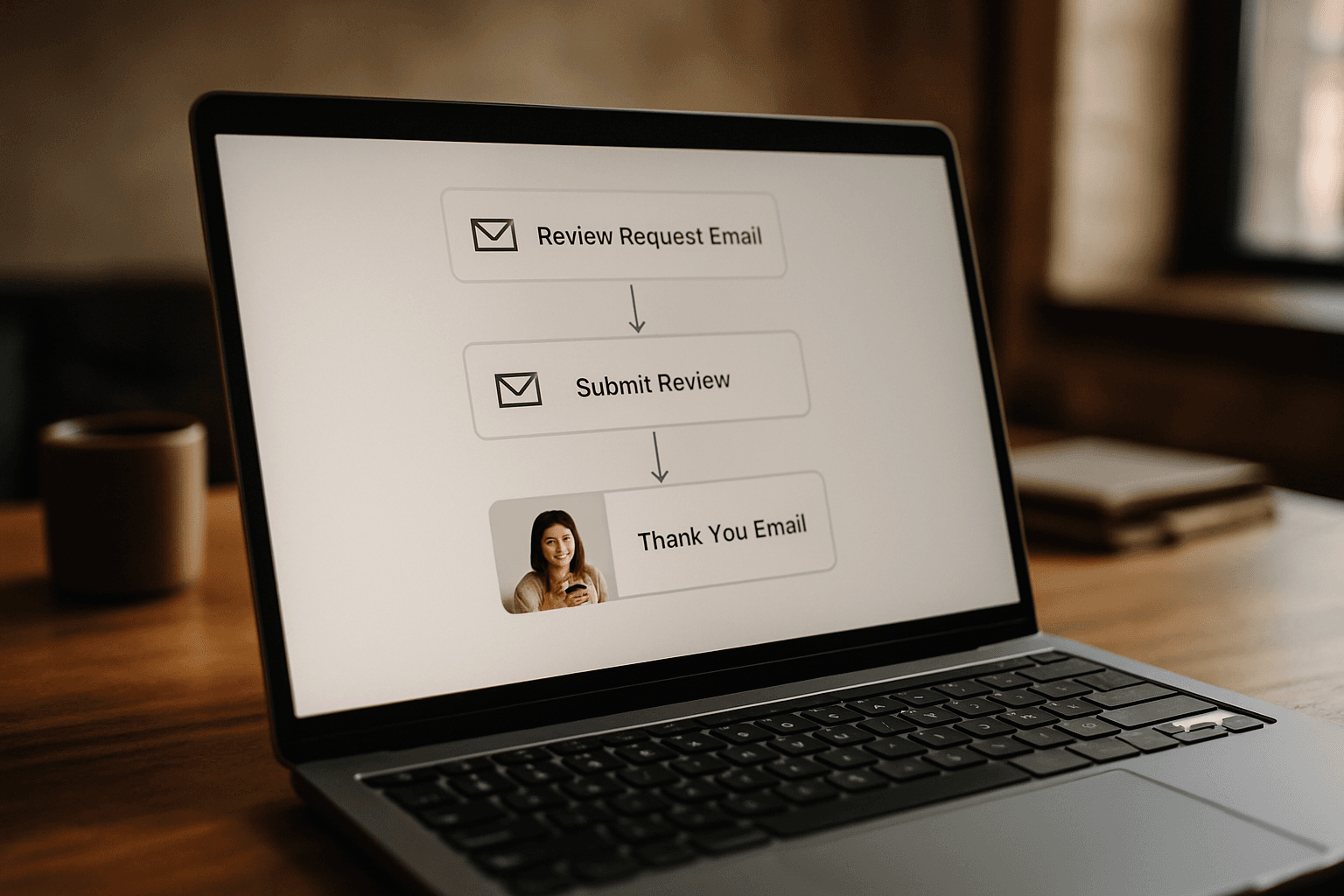
Every DTC brand needs this. 14 days post-delivery is the sweet spot for most categories (adjust to 7 for consumables, 30+ for durable goods). The request email itself should be warm, short, and link directly to the Klaviyo Reviews request form. Brands that request reviews at this cadence collect 8-15 percent of customers as reviewers; brands that request at 2-3 days collect 2-4 percent (customer hasn't formed an opinion yet).
When a 5-star review comes in, trigger an automated thank-you email offering a 10 percent off code for their next order (or, better, a gift) valid for 14 days. The responder flow converts 15-25 percent of 5-star reviewers into a repeat purchase because you're meeting them at peak brand affinity.
When a 1-3 star review comes in, trigger a customer-service-team notification (not an automated email to the customer) and surface it in a Slack channel. The goal: reach out manually within 4 hours to fix the issue. A saved 1-star customer becomes a 5-star advocate 40 percent of the time when handled well.
This is the lever most brands miss entirely. Build a monthly campaign that pulls your 5 best reviews from the last 30 days and features them in a "Customer Stories" email, with the reviewer's first name, photo (if provided), and the product they reviewed. Revenue per recipient on these campaigns typically beats brand-voice campaigns by 30-60 percent.
Loyal Send specializes in email marketing strategies that drive real results. Let us show you what's possible.
Schedule a CallFor a 30,000-subscriber DTC brand with a healthy 2.5 percent average campaign conversion rate and $95 AOV, a single UGC-driven campaign typically generates $45,000-$85,000 in attributed revenue. Running 4 UGC campaigns per month adds $180K-$340K in monthly email revenue. The content cost is near zero (customers wrote it). The incremental cost is the design time for the email layout.
Month 1: You have 5 great reviews to syndicate. Month 12: You have 500. The brands running this playbook for 2+ years end up with a library of UGC that covers every objection, every customer archetype, and every product variation. Each new review extends the library. The marketing content problem that eats so much of a DTC marketer's time effectively solves itself.
Consistent post-purchase request flow at 14 days, an incentive (10 percent off next order for leaving a review), and mobile-friendly review form. Brands doing all three collect 10-15 percent of customers as reviewers.
The free tier handles basic collection. Paid tiers unlock advanced filters, integration with social ads, and photo/video review collection. For DTC brands over $1M revenue, paid is worth it.
Yes, heavily. Pre-purchase subscribers convert at 2-3x the rate when the campaign includes customer voices. This is where UGC email earns its biggest lift.
Never feature negative reviews in email marketing, but do include nuanced 4-star reviews that show honest tradeoffs. This increases trust and conversion.
2-4 times per month for most DTC brands. Beyond that, you risk fatigue. The sweet spot is one UGC campaign per week, integrated into your normal calendar.